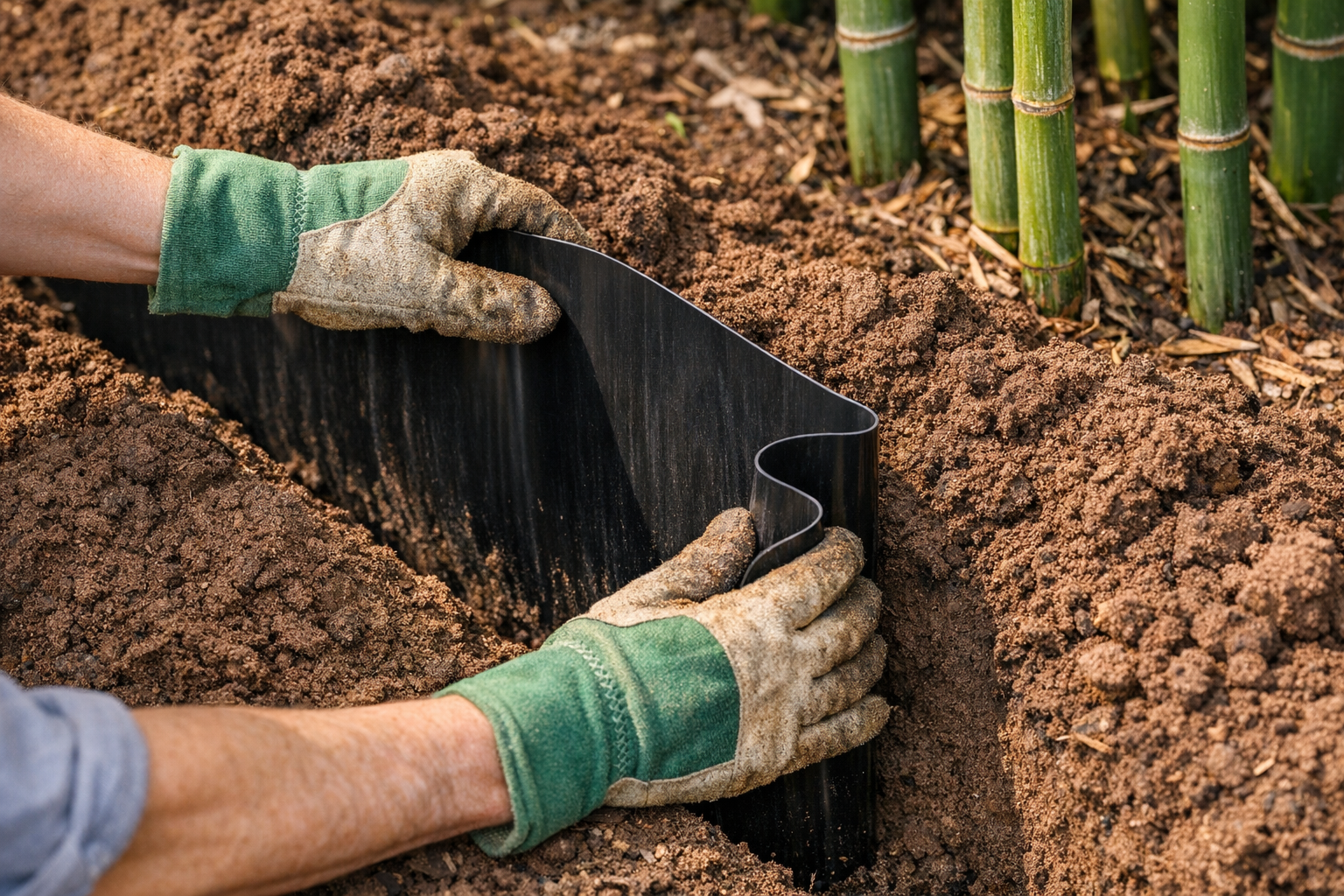
Bamboo adds exotic beauty to any garden. However, its aggressive growth often turns into a landscaping nightmare. Running bamboo species spread rapidly through underground stems called rhizomes. Consequently, these rhizomes invade lawns, crack patios, and annoy neighbors. You must contain them effectively. A high-density polyethylene (HDPE) root barrier offers the best defense. This guide explains how to install a root barrier system correctly.
Understanding the Enemy: Rhizomes
Before digging, you must understand how bamboo spreads. Running bamboo does not grow like a tree. Instead, it sends out horizontal runners just below the soil surface. These runners, or rhizomes, are incredibly strong. They can pierce through asphalt and poor-quality barriers. Therefore, simple landscape fabric will fail.
You need a heavy-duty physical shield. Experts recommend a barrier thickness of at least 60 mil. Anything thinner risks puncture. Additionally, the material must be smooth. A smooth surface prevents roots from gripping the barrier. If the root cannot grip, it cannot turn downward. Instead, it slides along the surface. Eventually, we want it to turn upward toward the light. Once it surfaces, you can easily prune it.
The HDPE Barrier That Finally Stopped My Golden Bamboo from Crossing the Property Line
After watching my golden bamboo rhizomes tunnel under a flimsy plastic sheet and emerge in my neighbor’s vegetable garden, I learned that not all root barriers are created equal. A proper high-density polyethylene barrier installed correctly is the only thing that actually works.
What works
- The 50ft length gives you enough coverage to fully encircle a bamboo grove without awkward seams that rhizomes exploit to break through.
- The HDPE material is thick enough to resist puncture from aggressive rhizome pressure, unlike thinner plastic that degrades or tears within 2–3 seasons.
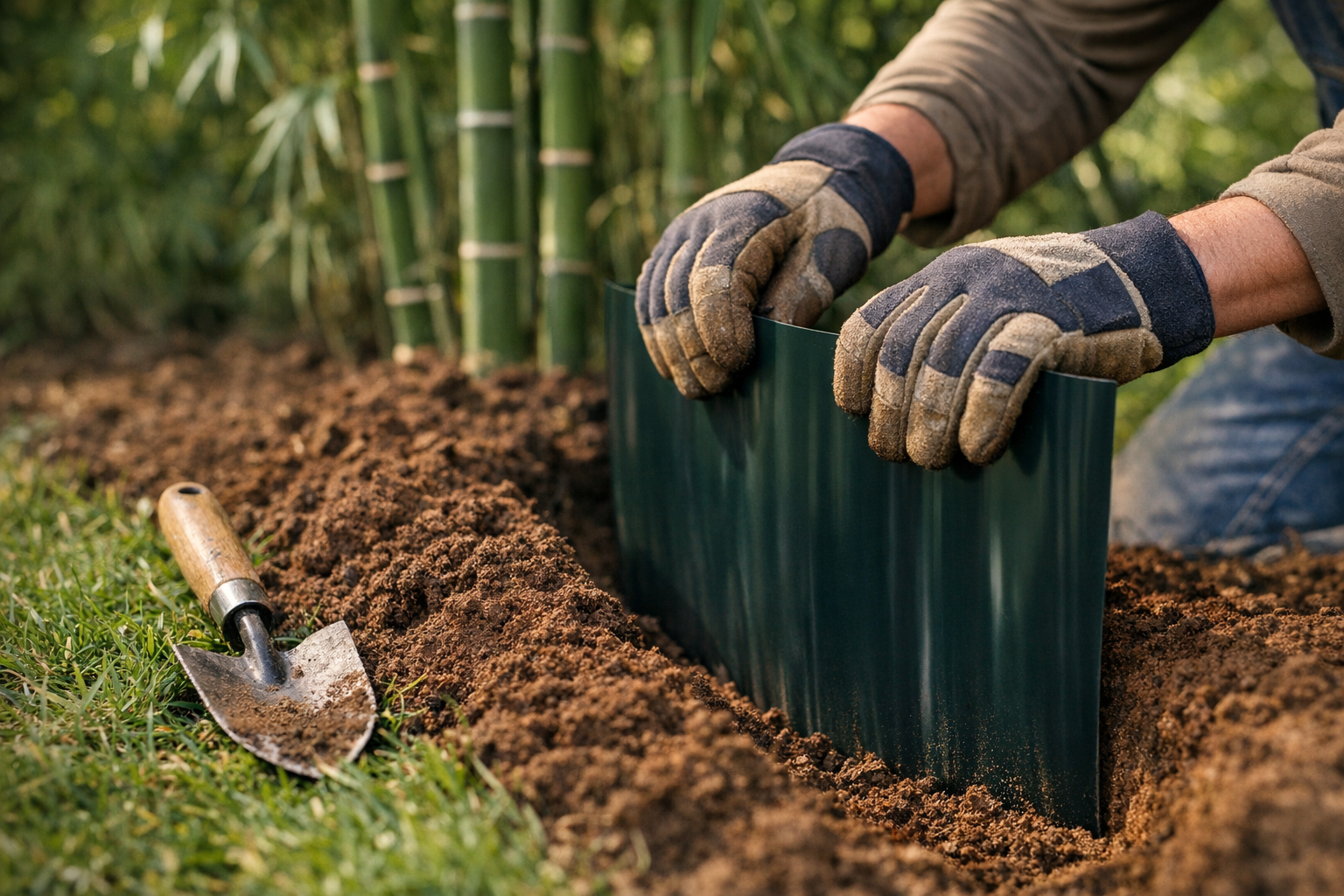
- Installing it vertically (8–12 inches above grade) actually works—rhizomes are shallow feeders and won’t climb over a properly angled barrier top.
What doesn’t
- Installation is back-breaking labor—digging a trench deep and straight enough takes a full weekend, and the barrier itself is stiff and awkward to position without a helper.
- You have to overlap seams by at least 6 inches and secure them, or rhizomes will find the gap; the product alone doesn’t guarantee containment if you cut corners on installation.
I almost abandoned the whole project halfway through the second trench, convinced I’d bought the wrong product—until I realized my first barrier was failing because I’d rushed the seams. 50ft Tree Root barrier
50ft Tree Root barrier
I installed this vertically around my grove three seasons ago and haven’t seen a single breakthrough yet.
Check Price on Amazon →This post contains affiliate links. As an Amazon Associate, I earn from qualifying purchases at no extra cost to you.