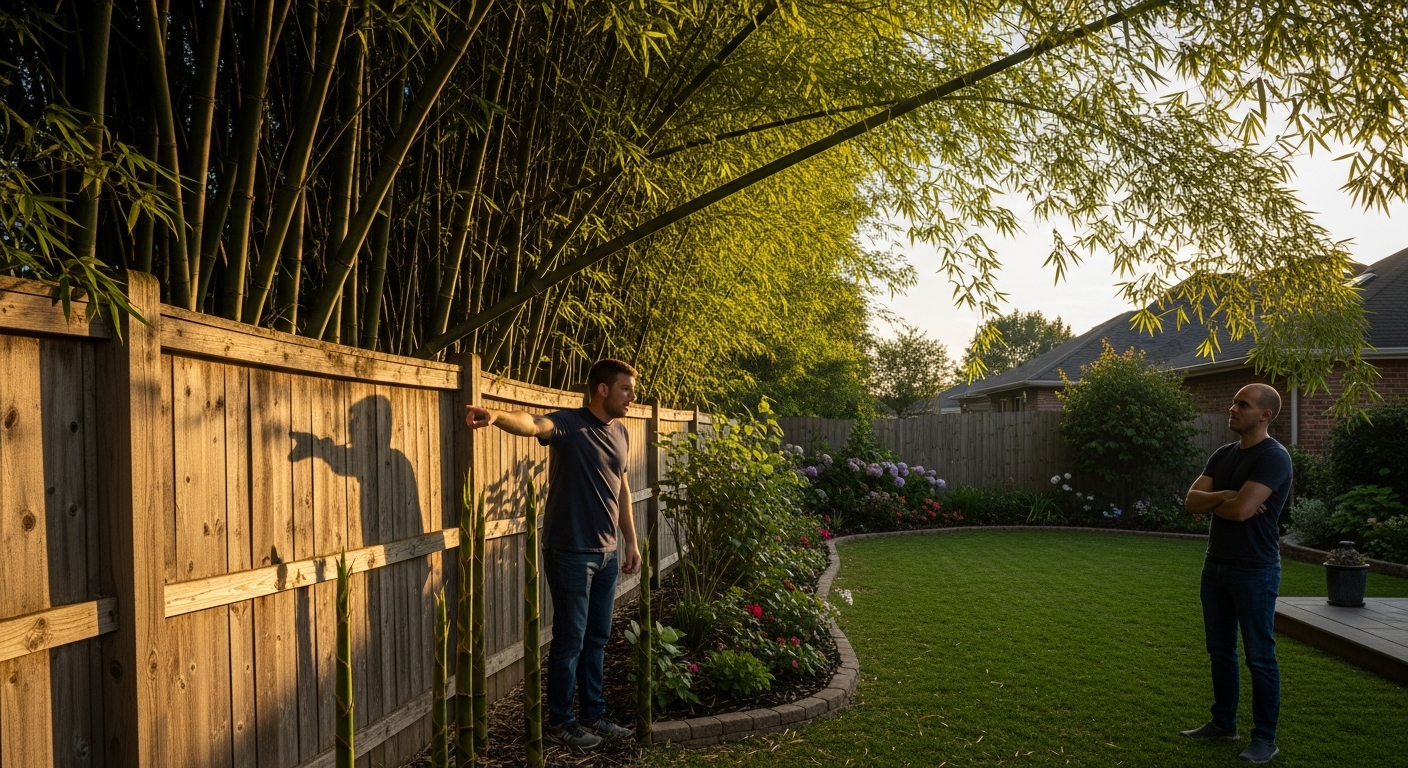
I learned the hard way that state-level bamboo laws are only half the story. When a client planted a 12-foot stand of Phyllostachys aurea on their property in suburban Colorado, they checked Colorado’s relatively permissive state regulations and thought they were clear. Three months later, their HOA sent a formal notice demanding removal within 90 days. The bamboo hadn’t violated a single state statute—but it had violated the neighborhood’s architectural covenant, which banned “invasive plant species” without defining them, and the city’s municipal code capped ornamental plantings at 8 feet in residential zones.
That experience opened my eyes to what state bamboo laws simply don’t address: the HOA bamboo rules, municipal nuisance ordinances, setback requirements, and height restrictions that operate below state oversight and often directly contradict what state law permits. These local restrictions are where most backyard bamboo growers actually run into trouble. This post walks through where those rules hide and how to find them before you plant.
The Three-Layer Problem: Why State Law Isn’t Enough
Most people who research bamboo regulations stop at the state level. They learn that their state doesn’t have a blanket bamboo ban, or that it restricts only certain species. In fact no state bans bamboo outright — neither Washington’s noxious weed quarantine list nor Oregon’s noxious weed quarantine rule (OAR 603-052-1200) lists a single bamboo genus. The strictest state rule is Connecticut’s running bamboo statute (Conn. Gen. Stat. § 22a-381e), which makes owners liable when running bamboo crosses a property line and requires sellers to hand buyers a written disclosure. They plant confidently. Then they discover that state law is actually the weakest layer of regulation affecting their bamboo.
Here’s why: state regulations set a floor, not a ceiling. A state saying “bamboo is legal” doesn’t prevent your HOA from saying “bamboo is prohibited in this community.” It doesn’t prevent your city from restricting plant height or enforcing nuisance ordinances against spreading root systems. Those layers—HOA covenants and municipal codes—exist in their own legal universe and operate independently of what the state permits.
The result is a fragmented patchwork. You might live in a state with no bamboo restrictions at all, yet still be unable to legally plant bamboo because your HOA prohibits it, or because your city’s height ordinance caps growth at 6 feet and your chosen variety naturally reaches 15 feet.
HOA Architectural Review Boards: The Real Gatekeepers
If you live in an HOA community (roughly 72 million Americans do), the architectural review board is your actual regulatory authority for bamboo, not your state legislature.
HOA covenants are binding property documents. When you bought your home, you agreed to them legally, and violating them can result in fines, forced removal, or liens on your property. The HOA’s architectural review process gives them formal authority to approve or deny plantings before they go in the ground.
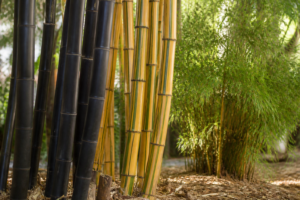
What makes this layer particularly tricky is the vague language many HOAs use. Some covenants explicitly ban bamboo by name. Others use language like “no invasive species,” “no running plants,” or “no plants exceeding 8 feet without board approval.” These terms sound objective but require interpretation. Phyllostachys nigra (black bamboo) is often assumed to be a clumper because of its refined look, but every Phyllostachys species is a runner and will spread by rhizome unless barriered — so an “invasive species” clause is very likely to catch it. A 30-foot Phyllostachys edulis might violate a height covenant while a dwarf Pleioblastus pygmaeus at 2 feet wouldn’t.
The solution here is direct: request your HOA’s architectural guidelines in writing and submit a formal review request before planting. Include species name, expected mature height, whether you’ll use a root barrier, and photos of the specific location. Getting written approval protects you if regulations change later or if a neighbor complains.
Municipal Height, Setback, and Nuisance Rules
Even if your HOA approves your bamboo, your city might not. Municipal ordinances operate on a different legal basis—they’re enacted to serve public health, safety, and welfare, and they apply to every property regardless of HOA status.
The most common municipal restrictions fall into three categories:
- Height limits for ornamental plantings: Many residential zones cap ornamental plant height at 6–8 feet to preserve sightlines at intersections and maintain neighborhood character. A 25-foot Phyllostachys edulis would violate this even if it’s technically clumping.
- Setback requirements: Some cities require ornamental plantings to be set back a specific distance from property lines, sidewalks, or streets. This is less about the plant itself and more about sight triangles and pedestrian safety. A 4-foot setback requirement could prevent you from planting along your front property line.
- Nuisance ordinances: These are catchall provisions that prohibit plants that create “nuisance conditions”—undefined vaguely but typically meaning things that invade neighboring properties, block views or utilities, or create hazardous conditions. A running bamboo spreading into a neighbor’s yard could technically violate this.
How to Actually Find Your Local Rules
There is no national database for HOA rules or municipal bamboo ordinances. No searchable government website tells you what your specific neighborhood allows. You have to dig for these documents yourself, and the process varies by jurisdiction.
For HOA rules: Start with your HOA management company’s office or website. Request your CC&Rs (Covenants, Conditions & Restrictions) and your architectural guidelines document. If you don’t have contact info, check your property deed or mortgage documents—they’ll reference the HOA. You’re legally entitled to these documents. If the HOA drags its feet, your state’s homeowner association law (every state has one) typically gives you a deadline to receive them, usually 10–30 days.
For municipal rules: Call or visit your city planning department in person. Ask specifically for:
- The zoning code for your property (you can provide your address)
- Height restrictions for landscaping or ornamental plantings
- Setback requirements
- Any local ordinances specifically addressing “invasive” or “running” plants
Many cities now post zoning codes online. Search “[your city name] municipal code” or “[your county] zoning ordinance.” Once you find the code, look under “landscaping,” “plant materials,” or “nuisance” sections. If your city is online, they’ll usually have a GIS map tool where you can plug in your address and see your exact zoning designation, which then points you to the relevant code sections.
Don’t skip this step. I’ve seen gardeners invest hundreds in bamboo, install it, and face removal demands months later when a neighbor complaint triggered a code enforcement review.
Root Barriers and How Local Rules Affect Installation
If your HOA and city both approve your bamboo, a quality root barrier becomes your best friend for compliance. Many municipal nuisance ordinances and HOA rules are specifically concerned with running bamboo spreading into neighboring properties. A proper barrier prevents that entirely.
When you’re shopping for barriers, look for rigid HDPE (high-density polyethylene) products that are at least 20 mil thickness. Thinner barriers degrade over time and fail. For a typical 8–12 foot planting bed, something like these 20-foot root barrier options gives you enough material to dig down 24–30 inches (bamboo rhizomes rarely penetrate deeper) and extend 18 inches above ground to prevent jumping.
Some HOAs and cities even prefer barriers as a condition of approval. They want physical evidence that you’re managing spread risk. Getting approval from your architectural board before installation also means having documentation if—years down the line—someone questions whether your bamboo is compliant.
What to Do If Your Rules Say No
Sometimes after digging through these documents, you find that bamboo is explicitly prohibited or that your specific variety violates local height caps. You have three options:
- Appeal to the architectural board (HOA) or planning board (city): Many boards grant variances or make exceptions based on specific circumstances. You might argue that clumping species are not “invasive,” or that your 12-foot variety can be pruned to 8 feet and maintained at that height annually. Put your request in writing with photos and species specifics. You won’t always win, but you won’t win if you don’t ask.
- Plant in a location where rules don’t apply: Backyard or rear-yard setback requirements often differ from front-yard rules. Some HOAs apply restrictions only to “visible” plantings. A side yard behind a fence might have different oversight than an exposed front corner.
- Choose a different species: If Phyllostachys edulis is too tall, Phyllostachys nigra might be acceptable, or Pleioblastus fortunei at 8 feet might work where taller varieties don’t. Clumping species like Fargesia robusta face less resistance from “invasive species” rules.
The Bottom Line
Before you buy a single bamboo plant, spend an afternoon tracking down three documents: your HOA CC&Rs, your HOA architectural guidelines, and your city’s zoning code for your specific property. These three pieces of paper matter more than state law for what you can actually plant. Yes, it’s tedious. Yes, some municipalities make it harder than others to access this information. But the 2–3 hours you invest now will save you hundreds in removal costs and relationship damage with neighbors and HOAs later.
The gardeners I know who successfully grow bamboo in HOA communities aren’t the ones who got lucky—they’re the ones who got permission, in writing, before the first hole was dug. That’s the real landscaping rule at the local level.
About This Article

Written by Marcus Chen. Marcus Chen has spent 15 years cultivating and studying bamboo across 14 different species, combining commercial growing operations with extensive hands-on experience in species selection and containment. As both a grower and consultant, he specializes in practical bamboo management, helping homeowners and landscapers understand the real-world requirements for responsible bamboo cultivation. Marcus brings tested knowledge of which species thrive reliably and which present containment challenges that go beyond standard recommendations. More about this site.
Verify this against a primary source
Specifics change, and your situation may differ from the one described here. These are the authorities worth checking directly:
- American Bamboo Society — species listings and cultivation guidance
- USDA PLANTS Database — species range and identification
- USDA Plant Hardiness Zone Map — cold hardiness verification for your location