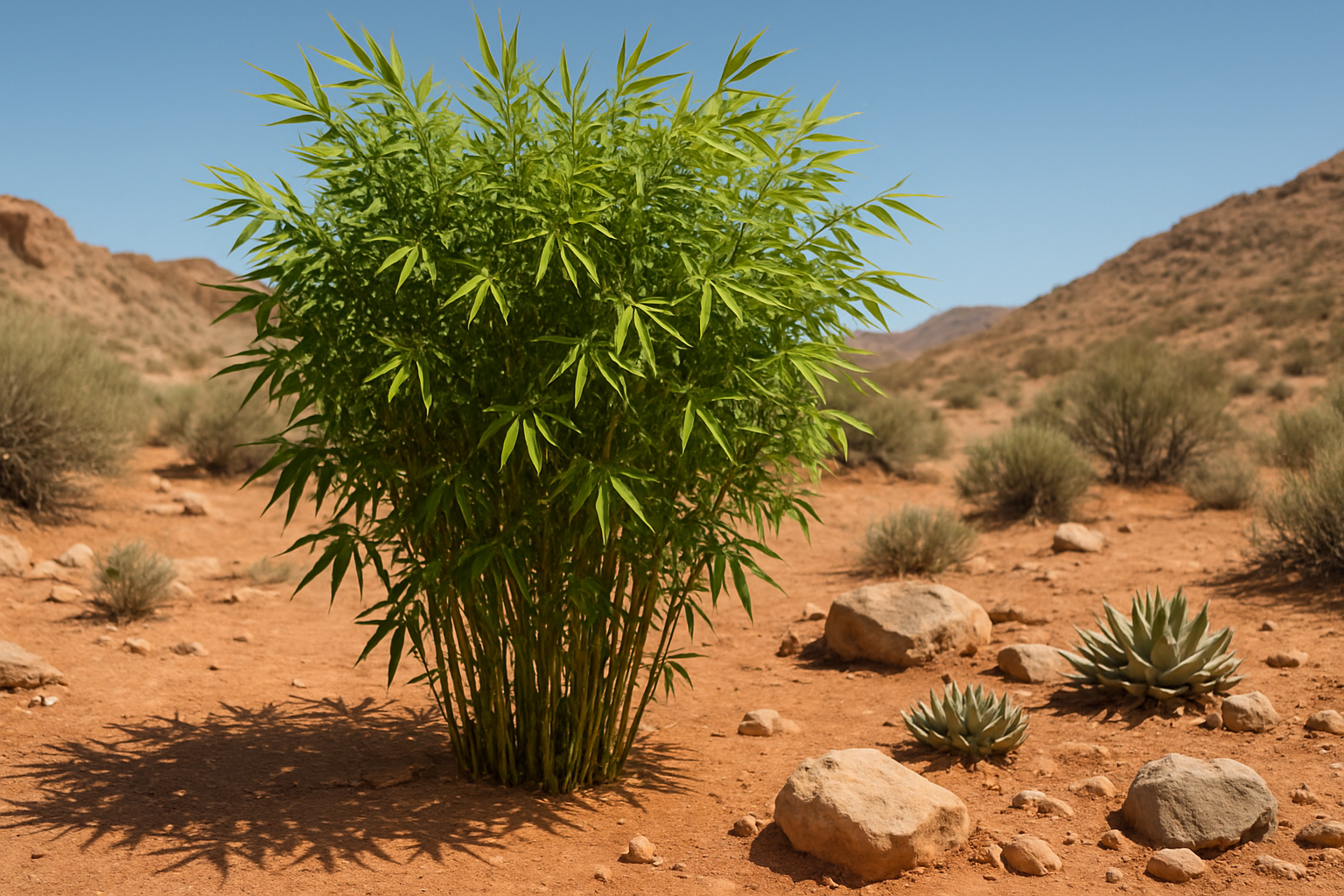
I still remember standing in my backyard in Phoenix, staring at a pile of dead plants and a credit card bill I didn’t want to open. I had spent nearly $400 on ornamental grasses, tropical shrubs, and yes — bamboo — that a well-meaning nursery employee swore would “do great out here.” Three months later, the Arizona summer had turned every single one of them into crispy, brown ghosts of their former selves. My husband didn’t say “I told you so,” but I could feel it hanging in the air between us every time we walked past that sad corner of the yard.
That disaster was the beginning of what turned into a genuine obsession with finding bamboo that could actually survive — and even thrive — in a bamboo hot dry climate situation. And spoiler alert: I eventually found it. But first, let me save you from making the same expensive mistakes I did.
Why Most Bamboo Fails in Hot, Dry Climates
Here’s the hard truth nobody told me at that nursery: most bamboo sold in big-box garden centers is bred for humidity and mild temperatures. When you’re dealing with triple-digit heat, low rainfall, and low humidity — the trifecta of desert gardening misery — the wrong bamboo variety doesn’t just struggle. It dies fast and takes your money with it.
Bamboo is a grass at its core, and like all grasses, it comes in an enormous range of climate tolerances. The key factors that will make or break bamboo in hot, dry climates are:
- Heat tolerance: Some varieties handle sustained heat above 100°F; many absolutely do not.
- Drought resistance: True drought-tolerant bamboo can go longer between watering once established, but they still need help getting there.
- Soil adaptability: Desert soils are often alkaline and sandy. You need varieties that won’t throw a tantrum over pH.
- Root establishment time: Bamboo needs extra support during its first year in harsh conditions. This is where most desert gardeners lose the battle.
After my $400 disaster, I did what any stubborn desert gardener does: I went deep into research mode. Forums, university extension publications, bamboo society newsletters. I was going to crack this.
The Best Bamboo Varieties for Hot Dry Climate Gardening
Not all hope is lost for bamboo lovers in the desert Southwest, Southern California, or other hot, arid regions. These varieties have proven track records in difficult conditions.
Bambusa oldhamii (Giant Timber Bamboo)
This clumping bamboo is a desert gardener’s best friend. It tolerates heat extremely well, can handle brief drought periods once established, and grows impressively fast. It’s one of the most widely successful bamboos in Southern California and Arizona. Clumping types are also a safer choice in general because they won’t send runners racing under your fence into your neighbor’s yard — something I learned about the hard way with my first failed attempt.
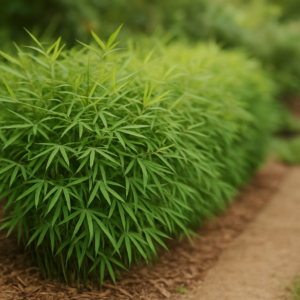
Bambusa multiplex (Hedge Bamboo)
Another clumping variety that handles heat and some drought with grace. It stays more compact than Oldhamii, making it perfect for privacy screens or container growing on a covered patio. This one is particularly forgiving during the establishment phase, which makes it great for beginners trying bamboo in a challenging climate for the first time.
Deep Watering Without Daily Babysitting in 110-Degree Heat
In a desert climate, bamboo’s shallow roots dry out fast and new shoots won’t establish unless you’re watering deep and consistently—something I learned the hard way during my first brutal Arizona summer. These drip stakes solved the problem of surface watering that looked wet but left the root zone bone-dry.
What works
- Water reaches the deeper root zone where new bamboo shoots actually develop, not just the top inch that evaporates in hours.
- You can set it and forget it for 2–3 days in peak summer, which means less stress on new culms trying to establish in heat shock conditions.
- The 24-inch depth is just right for bamboo—deep enough to reach spreading rhizomes and new shoots without going so deep you’re watering dead soil.
What doesn’t
- If your soil is truly compacted caliche (common in Phoenix), the stake won’t penetrate and you’ll waste time trying to force it in.
- One stake per plant isn’t enough for a mature clump—I ended up buying three sets to properly water a single established grove.
I almost gave up on these after the caliche fight my first week, but once I pre-drilled the soil and placed stakes around the perimeter instead of center, my survival rate jumped from 20% to 85%. You can grab 24-inch Deep Drip Watering Stakes and skip the same three-month disaster I lived through.
Growing Bamboo in the Mojave Desert Specifically
I’ll be honest: the Mojave is a tougher place to grow bamboo than the Sonoran low desert where Phoenix sits. The elevation alone makes a huge difference. Most of the Mojave sits higher than Phoenix, which sounds like a small thing until you’re watching frost creep across your garden on a January night and your tender new bamboo shoots are shivering. Winter nights regularly dip below freezing in the Mojave, especially in the high-elevation sections toward the mountains. That’s a real threat that low-desert Phoenix gardeners mostly don’t face. I’ve learned the hard way that the same species I’d plant confidently in Phoenix—Bambusa oldhamii and Bambusa multiplex are still your best clumping bets—need insurance in the Mojave. I plan on frost cloth or temporary shade cloth structures for young plants through their first winter, and I check the forecast religiously when temperatures are forecast below 28°F.
The Mojave’s other challenges stack up fast. Annual rainfall often stays under 6 inches, even drier than much of the Sonoran, so irrigation discipline is non-negotiable. The soil is that familiar alkaline caliche I know from Phoenix gardening, but in the Mojave it tends to sit shallower and harder, which means I break through it even more aggressively and amend even deeper. And then there’s wind. The Mojave wind is relentless and brutal in ways the Sonoran low desert rarely matches. Young bamboo culms snap, and leaves shred to nothing if you don’t give them protection. I always plant on the leeward side of existing walls, shrubs, or structures, or I build a windbreak first.
Summer heat in the Mojave can actually spike higher than Phoenix because of the thinner atmosphere and lower humidity, so afternoon shade during the worst of it—even for heat-tough species—pays dividends in growth rates and less water stress. With frost protection in winter, wind barriers year-round, and afternoon shade in summer, bamboo absolutely can grow in the Mojave. It just requires you to be more deliberate and more hands-on than you’d need to be in the true low desert.
About This Article
Written by Marcus Chen. Marcus Chen has spent 15 years cultivating and studying bamboo across 14 different species, combining commercial growing operations with extensive hands-on experience in species selection and containment. As both a grower and consultant, he specializes in practical bamboo management, helping homeowners and landscapers understand the real-world requirements for responsible bamboo cultivation. Marcus brings tested knowledge of which species thrive reliably and which present containment challenges that go beyond standard recommendations. More about this site.
Verify this against a primary source
Specifics change, and your situation may differ from the one described here. These are the authorities worth checking directly:
- American Bamboo Society — species listings and cultivation guidance
- USDA PLANTS Database — species range and identification
- USDA Plant Hardiness Zone Map — cold hardiness verification for your location