Category: Uses & Crafts

  • Bamboo Cutting Boards Changed My Kitchen: An Honest Convert’s Review

    Bamboo Cutting Boards Changed My Kitchen: An Honest Convert’s Review

    I once used a bamboo cutting board as a makeshift sled lid during a freak October snowstorm. Yes, you read that correctly. I dragged my brand-new, never-been-used bamboo board outside, plopped it under my nine-year-old, and watched him careen down our tiny backyard hill three glorious times before I remembered I’d bought it to chop onions. If you’re looking for a bamboo cutting board review written by someone with excellent judgment, I regret to inform you that you’ve come to the wrong place — but stay anyway, because the story ends well and so does my kitchen.

    This post contains affiliate links. As an Amazon Associate, I earn from qualifying purchases.

    After the Great Sled Incident of last autumn, I figured I owed that board a proper second chance. I wiped off the grass stains, oiled it up, and actually started using it in my kitchen the way nature — and the Amazon warehouse — intended. What happened next genuinely surprised me. Within a few weeks, I had quietly retired every plastic cutting board I owned. What follows is my completely honest, slightly embarrassing account of how bamboo cutting boards changed the way I cook.

    Why I Was Skeptical of Bamboo Cutting Boards (And Why I Was Wrong)

    I’ll be upfront: I was a plastic-board person for most of my adult life. Plastic seemed practical — toss it in the dishwasher, done. But plastic boards develop deep knife grooves surprisingly fast, and those grooves are basically tiny bacteria apartments. Research from the University of California, Davis actually found that bacteria on wooden and bamboo surfaces tend to die off naturally, while bacteria in plastic grooves can survive repeated washing. That alone made me willing to give bamboo a real shot.

    Bamboo has some genuinely impressive properties that make it ideal for kitchen cutting surfaces. It’s one of the hardest grasses on earth — technically a grass, not a wood — yet it’s gentler on knife edges than most hardwoods because of its natural fiber structure. It’s also naturally moisture-resistant and contains a biological agent called bamboo kun, which gives it antimicrobial properties. And unlike slow-growing hardwood trees, bamboo reaches harvest maturity in three to five years, making it a dramatically more sustainable choice.

    My Bamboo Cutting Board Review: What I Actually Use Every Day

    After testing several boards over the past several months, I’ve settled on a clear rotation in my kitchen. Here’s what I recommend and why.

    For Big Jobs: The Empune 2XL Bamboo Cutting Board

    This board — the Empune 2XLarge 20″ Bamboo Cutting Board — is the one I now keep on my counter full-time. The 20-inch length is genuinely life-changing when you’re breaking down a whole chicken or slicing a watermelon without half of it ending up on the floor. The juice groove is deep enough to actually catch liquid (unlike some boards where the groove is basically decorative), and the built-in handles make it easy to carry to the table as a serving board. It’s heavy-duty without feeling clunky.

    A Great Mid-Size Option: Keechee Extra Large Bamboo Cutting Board

    If 20 inches sounds like too much real estate, the Keechee 18-Inch Extra Large Bamboo Cutting Board hits a sweet spot. It comes pre-oiled, which is a huge bonus for anyone who’s ever received a brand-new board and immediately forgotten to condition it before use (definitely not speaking from experience). The handles are elegantly designed, and it doubles beautifully as a cheese board when company comes over. I’ve used mine for everything from slicing sourdough to prepping a full stir-fry’s worth of vegetables.

    Best Value Pick: Hiware Organic Bamboo Cutting Board

    The Hiware Extra Large Bamboo Cutting Board is the one I’d recommend to someone who wants to try bamboo without a big financial commitment. It’s 100% organic bamboo, arrives pre-oiled, and has a solid juice groove. At 18″ x 12″, it’s a practical everyday size. The surface feels smooth and substantial, and after months of daily use, mine shows barely any knife marks. Solid, reliable, and genuinely good quality.

    The One Thing Most People Skip (And Regret): Oiling Your Board

    Here’s where most bamboo board owners go wrong: they skip the oiling routine and then wonder why their board starts cracking after a few months. Bamboo, like wood, needs regular conditioning to stay hydrated and resist warping. This is not difficult. It takes about five minutes and feels oddly satisfying — like giving your kitchen tools a little spa day.

    You want a food-grade mineral oil that won’t go rancid. I use two options depending on my mood:

    A few practical oiling tips to keep your board in top shape:

    • Oil a new board before first use, even if it arrives pre-oiled — a second coat gives extra protection.
    • Oil monthly for regular-use boards, or whenever the surface starts to look dry or pale.
    • Always oil both sides to prevent uneven moisture absorption, which causes warping.
    • Never soak bamboo boards in water or put them in the dishwasher — hand wash and dry immediately.
    • Stand the board upright to dry so air circulates on both sides.

    The Happy Ending (For Me and the Board)

    So here’s how the sled board story ends. After I cleaned it up and started using it properly, that original bamboo board became my most-used kitchen tool. It’s been through hundreds of meal preps, one memorable Thanksgiving turkey carving, and approximately forty-seven rounds of avocado toast. It has not cracked. It has not warped. It does not harbor mysterious smells. It

  • Building a DIY Bamboo Garden Trellis: The $25 Project That Made My Garden Instagram-Famous

    Building a DIY Bamboo Garden Trellis: The $25 Project That Made My Garden Instagram-Famous

    • Mark your layout first. Use stakes and string to mark where your uprights will go before you touch a single bamboo pole. For a basic A-frame or flat grid trellis, two to four uprights are all you need. Spacing them evenly — typically 18 to 24 inches apart — will make the whole thing look intentional and professional.
    • Drive uprights in at least 12 inches deep. For an 8-foot stake, that means you’ll have about 6.5 feet of usable height above ground. Use a mallet rather than a hammer to avoid splitting the bamboo at the top.
    • Lash your crosspieces with a square lashing technique. Start by wrapping the twine around the vertical pole just below where the horizontal pole will rest, then bring it up and around both poles in a figure-eight pattern, pulling firmly after each wrap. Finish with two or three tight frapping wraps between the poles to cinch everything together, then tie off with a square knot. It sounds more complicated than it is — watch one two-minute video and you’ll have it down.
    • Use the thicker 3mm jute at structural joints and the thinner

      I want to tell you about the afternoon I accidentally glued my hand to a bamboo pole in front of my entire neighborhood. It was a Tuesday. My garden looked like a sad tangle of tomato plants leaning against each other like tired commuters on a subway, and I had decided — with exactly zero woodworking experience — that I was going to build a DIY bamboo garden trellis before sundown. Reader, I did not finish before sundown. But I did end up with 47 new Instagram followers and a story I will never live down.

      This post contains affiliate links. As an Amazon Associate, I earn from qualifying purchases.

      If you’ve been eyeing those gorgeous bamboo trellises in garden magazines and thinking there’s no way you could pull that off, I’m here to tell you: you absolutely can. And if I can do it — a person who once spent twenty minutes trying to figure out which end of a hand saw does the cutting — you are going to be just fine. Let me walk you through exactly how I built mine for under $25, complete with the hard-won wisdom that only comes from publicly embarrassing yourself in your front yard.

      Why Bamboo Is the Perfect Trellis Material

      Before we get to the tools and the technique, let’s talk about why bamboo is genuinely wonderful for this project and not just trendy. Bamboo is one of the strongest natural materials you can use in a garden setting, with a tensile strength that rivals steel relative to its weight. It’s also naturally resistant to moisture, which means it won’t rot out on you after one rainy season the way cheap wooden dowels tend to do. It’s lightweight, easy to work with, and — this is the part that keeps getting me — it looks absolutely beautiful in a garden. There’s a warmth and an organic elegance to bamboo that plastic or wire trellis panels simply cannot replicate.

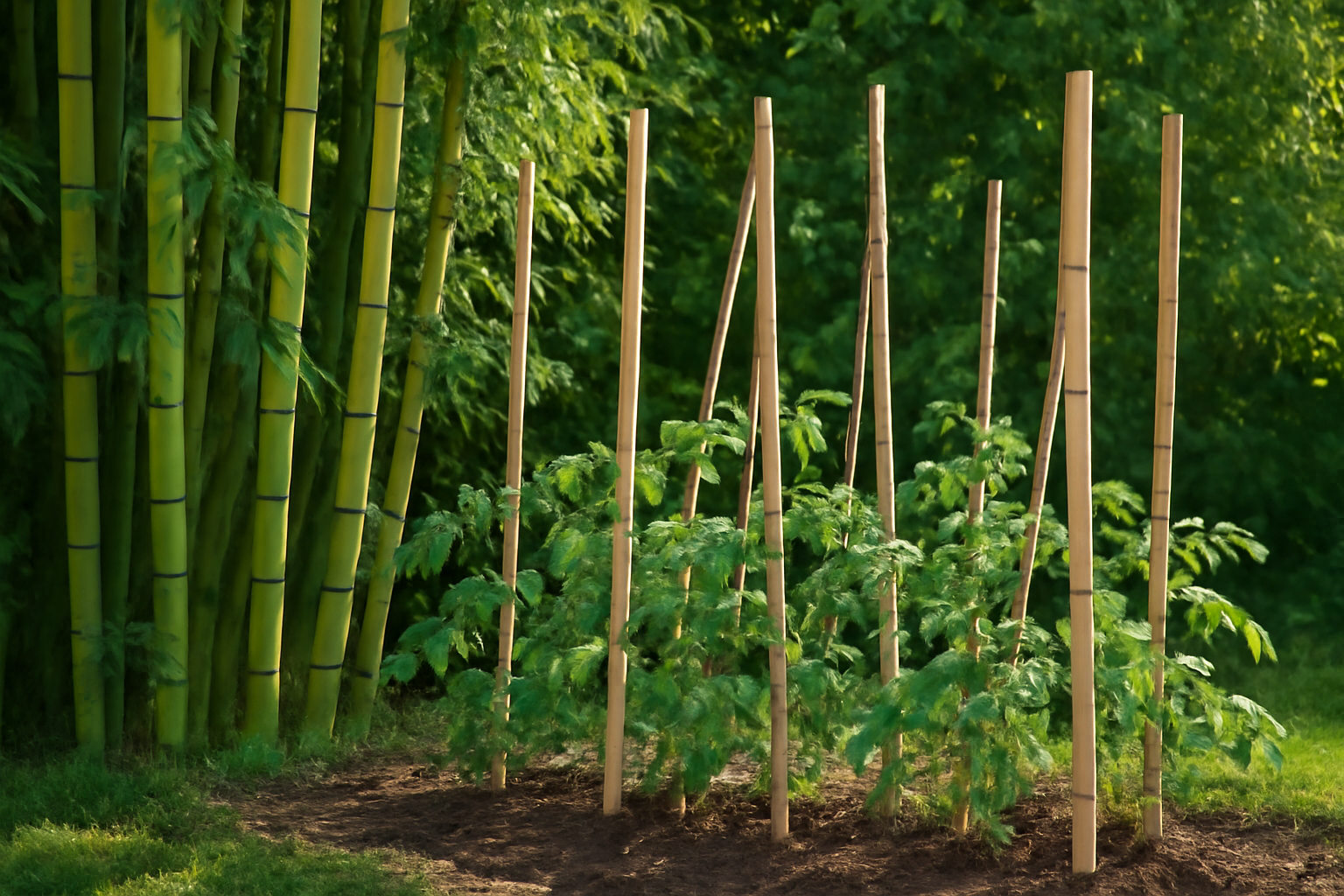
      For a trellis project, you’ll want to think about the scale of what you’re growing. Lighter climbers like sweet peas, beans, or small cucumbers can be supported beautifully by thinner stakes arranged in a fan or grid pattern. Heavier plants like tomatoes, grape vines, or large squash need something with more girth and a sturdier base. The good news is that bamboo stakes come in a range of sizes, so you can match the material to the job.

      Tools and Materials for Your DIY Bamboo Garden Trellis

      Here’s everything I used to build my trellis. The total came in right around $25, and I had leftover materials for two more smaller projects. I’ve linked everything I actually bought so you can grab the same stuff without having to guess.

      Recommended Products

      • For lighter climbers and the vertical uprights of a fan trellis: COLOtime Bamboo Stakes 58 Inch, 20 Pack — These are a great mid-height stake for beans, sweet peas, and shorter flowering vines. The 20-pack gives you plenty to work with for a full trellis panel.
      • For the main structural uprights if you’re supporting tomatoes or heavier vines: Cambaverd Bamboo Stakes 8 Feet, 1 Inch Diameter, 10 Pack — These thicker, taller poles are what I used for the main frame of my trellis. The one-inch diameter makes a real difference in stability, and eight feet gives you plenty of height above ground after you sink them in.
      • For filling in the grid work or a smaller project: Mininfa Natural Bamboo Stakes 4 Feet, 25 Pack — The 25-pack at four feet is ideal for the horizontal crosspieces of your trellis grid, or for building a shorter trellis for a container garden.
      • For tying everything together (and this is where I nearly went wrong — more on that in a moment): Vivifying Garden Twine, 656 Feet, 2mm Green — The thinner 2mm twine is perfect for lashing joints and tying plant stems to the trellis without cutting into them.
      • For a sturdier lash at the main structural joints: Vivifying Jute Twine, 328 Feet, 3mm Brown — The thicker jute is what you want where two poles cross and need to hold real weight. It’s also beautiful — the brown color looks completely natural against the bamboo.

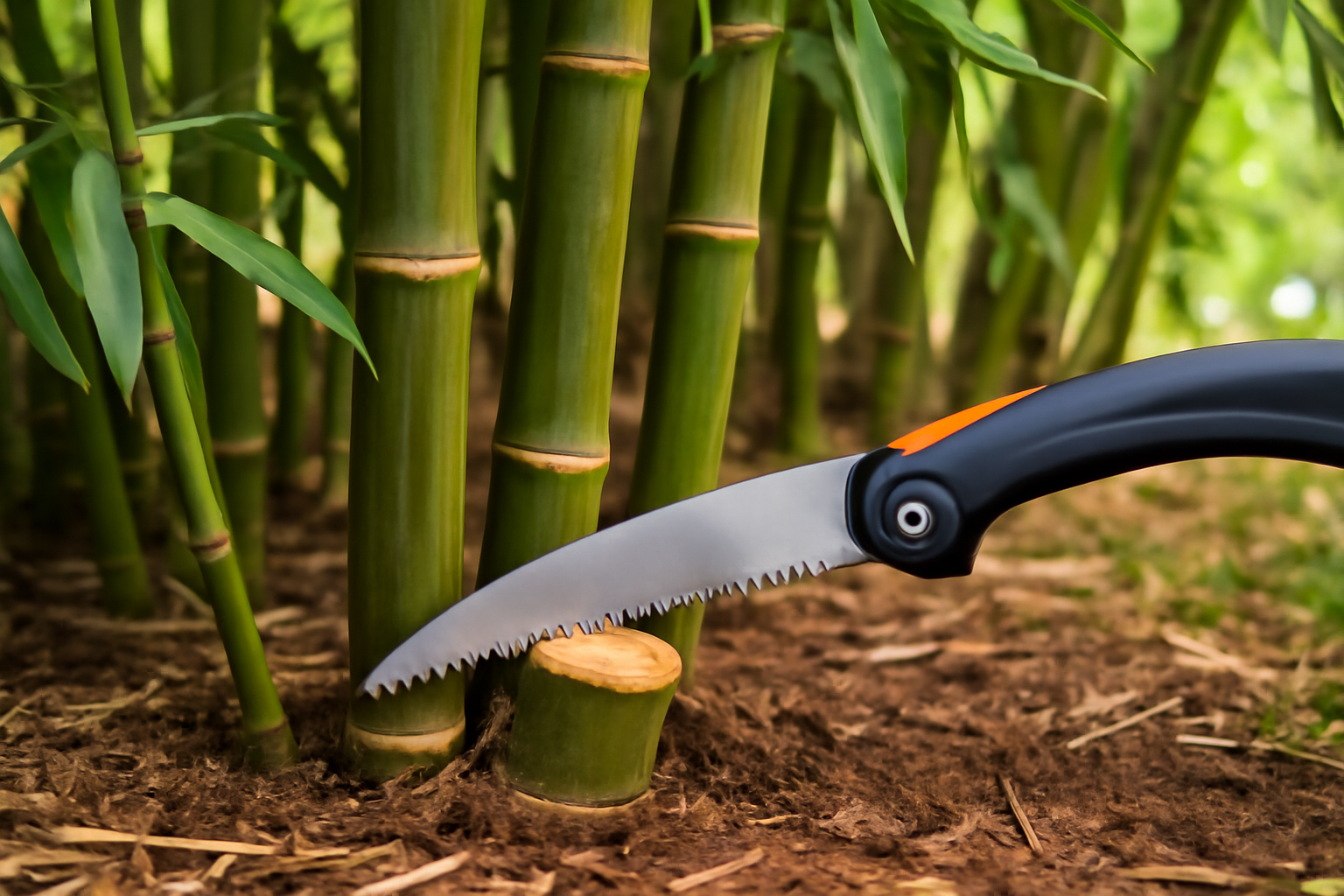
      Beyond these, you’ll need a mallet or rubber hammer to drive the uprights into the ground, and a pair of garden snips or a small hand saw for trimming any stakes to length. That’s genuinely it.

      How to Build the Trellis: Step by Step

      Okay, so here’s where things went sideways for me — and where they can go beautifully right for you if you learn from my disaster. I decided to skip the planning phase entirely because I am, at heart, an impulsive person who finds measuring deeply boring. I jammed my uprights into the ground with great enthusiasm, approximately eyeballed the spacing, and then realized I had built a parallelogram instead of a rectangle. My trellis leaned to the left like it was listening to something happening next door.

      My neighbor Carl watched this entire process from his driveway. He said nothing. He just nodded slowly, the way you nod at something you’ve decided not to comment on.

      Here is what I should have done — and what you should do:

      • Mark your layout first. Use stakes and string to mark where your uprights will go before you touch a single bamboo pole. For a basic A-frame or flat grid trellis, two to four uprights are all you need. Spacing them evenly — typically 18 to 24 inches apart — will make the whole thing look intentional and professional.
      • Drive uprights in at least 12 inches deep. For an 8-foot stake, that means you’ll have about 6.5 feet of usable height above ground. Use a mallet rather than a hammer to avoid splitting the bamboo at the top.
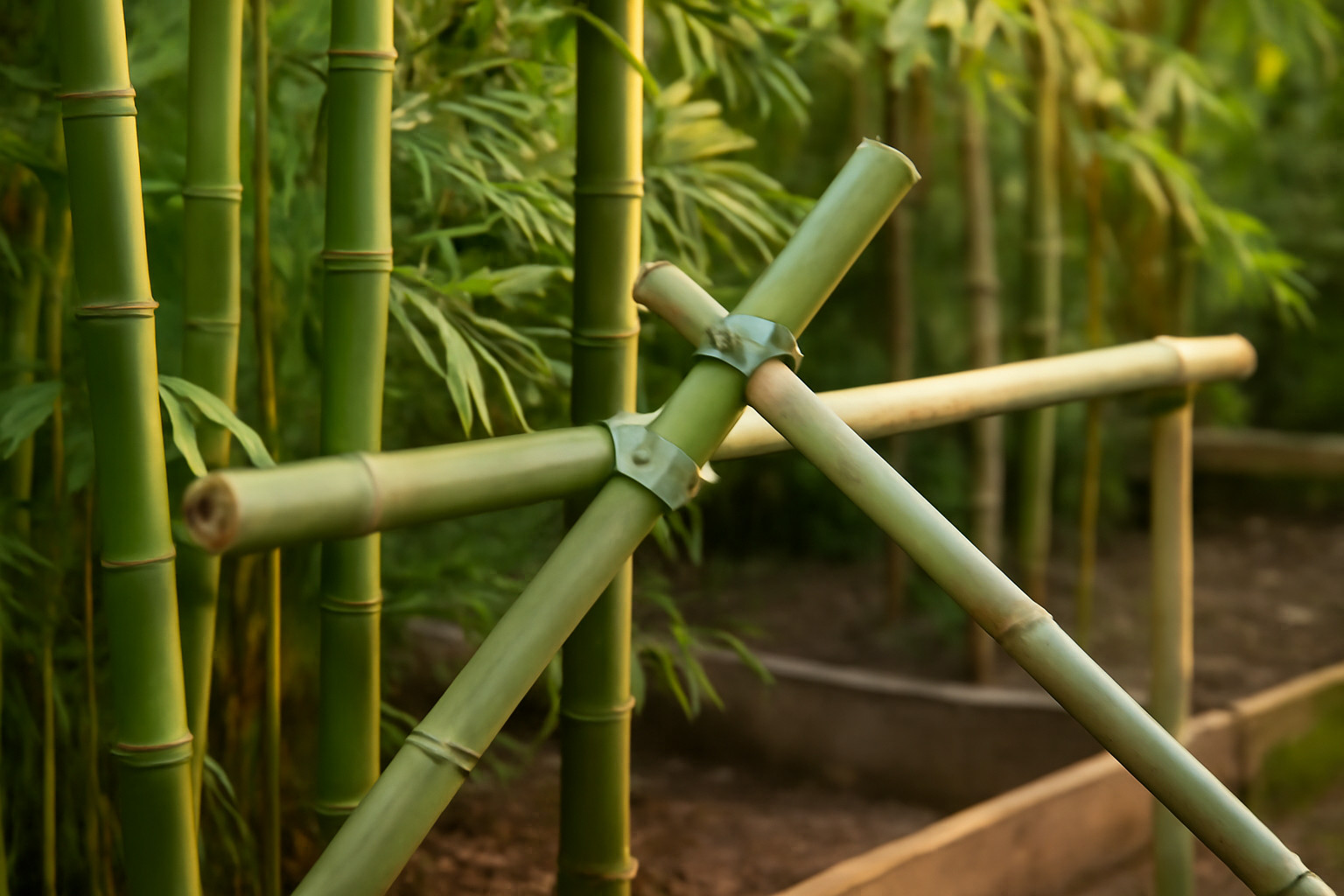
      • Lash your crosspieces with a square lashing technique. Start by wrapping the twine around the vertical pole just below where the horizontal pole will rest, then bring it up and around both poles in a figure-eight pattern, pulling firmly after each wrap. Finish with two or three tight frapping wraps between the poles to cinch everything together, then tie off with a square knot. It sounds more complicated than it is — watch one two-minute video and you’ll have it down.
      • Use the thicker 3mm jute at structural joints and the thinner