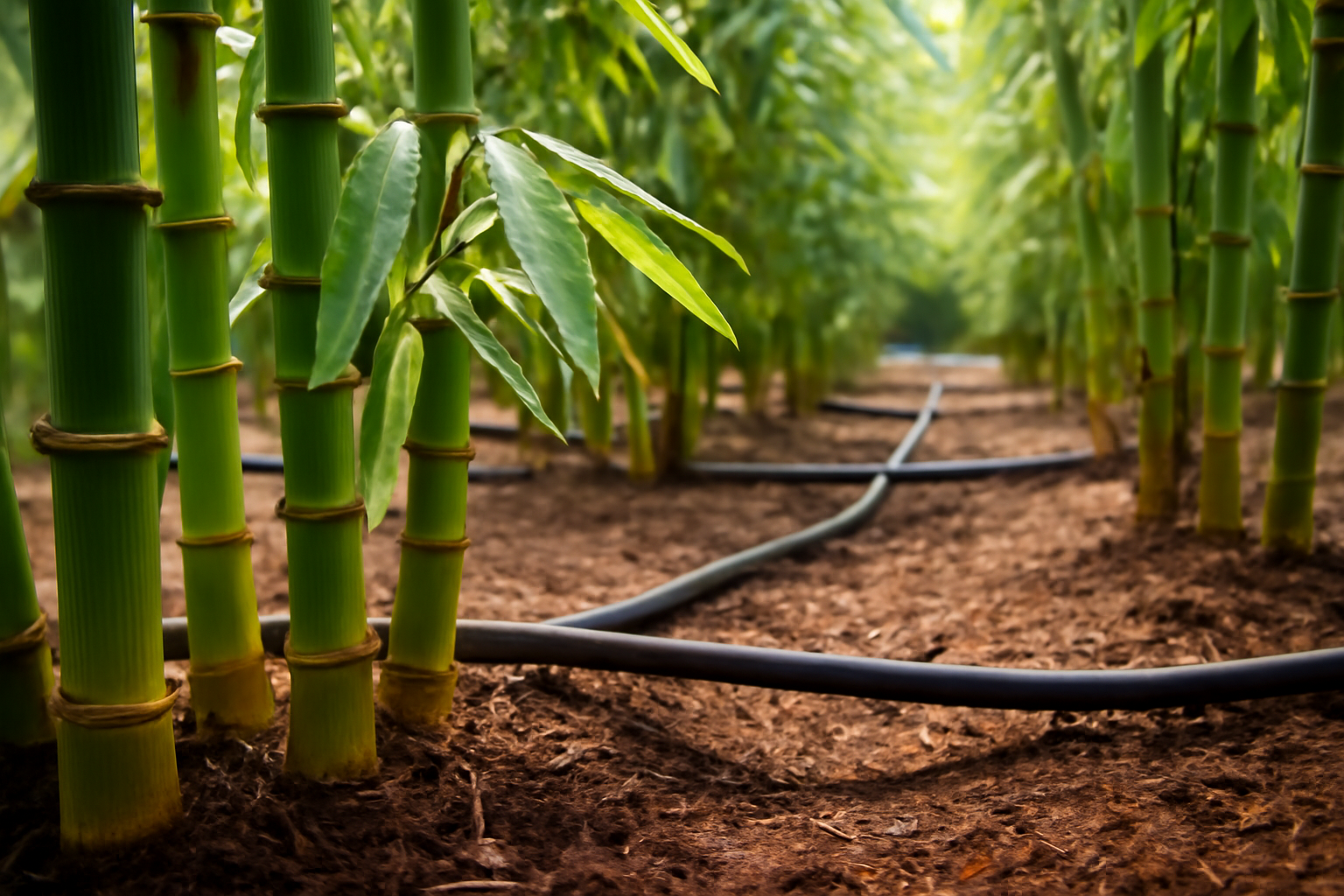
If you’ve landed on this drip irrigation bamboo plants review, there’s a good chance you’re staring down the same problem I was last spring: too many containers, too little time, and bamboo that punishes you immediately when watering goes sideways. I run a working nursery on my property — 14 species, hundreds of containerised plants at any given time, plus in-ground groves I manage for neighbours who inherited someone else’s planting decisions. Watering by hand stopped being practical years ago. But last year, my patchwork of soaker hoses and old-fashioned drip lines finally gave up the ghost at the worst possible time. I lost two weeks of consistent watering during a dry stretch, and a batch of Phyllostachys edulis seedlings I’d been nursing for months paid the price.
The Drip System That Keeps Hundreds of Containerised Bamboo From Drying Out Between Waterings
Container bamboo dries faster than in-ground stock, and skipping even one watering cycle during heat waves can stress new culms and stall growth for months. When you’re managing dozens of pots with different species and pot sizes, hand-watering becomes a guessing game — and bamboo punishes guessing.
What works
- The quick-connect system actually holds up to repeated assembly and disassembly across different nursery zones — I swap sections between my cold frames and the open yard without leaks developing.
- 230 feet of main line is enough to reach staggered rows of containers without running a second timer, and the emitter spacing lets me adjust flow to smaller pots without flooding the soil.
- Running on a simple battery timer means I can water deeply at dawn before heat hits, and bamboo absorbs moisture more efficiently during cooler hours — my spring growth has noticeably improved since I switched from midday hand-watering.
What doesn’t
- The tubing can kink in direct sun if you’re not burying or mulching it — I’ve had sections crack from UV exposure after one hot season, which meant replacing stretches mid-summer.
- Emitter clogging is real with hard water or sediment-heavy sources; even though the kit includes filters, I still backflush the lines monthly during heavy growth season or face dead zones in the nursery.
Last summer, a faulty timer left the system running for 18 hours straight and nearly waterlogged an entire flat of young Moso — I almost ripped the whole setup out that afternoon — but once I replaced the timer and adjusted the schedule, it became the most reliable tool in my nursery rotation. Check out the MIXC 230FT Quick-Connect Drip Irrigation System Kit if you’re serious about scaling past hand-watering.
Fitting It
The 230FT kit arrived coiled and kinked, so I soaked it in the sun for an hour to straighten it out. I ran the main line along the north side of my nursery beds and used the quick-connect fittings to branch off to different container zones—no tools needed beyond scissors to cut the tubing. The emitters pushed into the drip line easily by hand. Total setup took me about two hours to map out 14 species zones and dial in flow rates. The trickiest part was figuring out which emitters worked best for my mix of 5-gallon and 15-gallon pots; I ended up swapping some out to match container size.
How It Has Held Up
I’ve run this system through two full growing seasons now, roughly 18 months. The first month was all adjustment—I was constantly tweaking emitter positions and flow rates as I learned which containers dried fastest in afternoon sun versus shade. By mid-summer, it settled into a rhythm. The quick-connect fittings held up well through freeze-thaw cycles last winter, though I did drain the whole system before the first hard frost. One section of the main line developed a slow leak around month eight, probably from UV exposure and a kink I didn’t fully straighten. I replaced that 20-foot section rather than patch it.
Where It Falls Short
- The tubing degrades noticeably in direct UV after about a year—mine started cracking on the south-facing run. You need to either bury it, mulch over it, or plan to replace exposed sections annually.
- Quick-connect fittings are convenient but loose over time with temperature swings. I had to re-seat several connections mid-season after freeze cycles, or they’d weep.
- The kit assumes relatively flat terrain. My nursery slopes, and water pressure drops significantly on the downhill runs, so emitters at the end of long lines deliver less than those near the source.
- 230 feet sounds like a lot until you’re trying to cover a real nursery. I needed a second kit to reach my in-ground groves and the back half of my container area.
Would I Buy It Again
I’d buy it again for the quick-connect convenience and the fact that it actually works for container-heavy operations. But it’s not a set-it-and-forget-it system—you’ll spend time tuning it and replacing UV-damaged sections. If you’re managing fewer than 50 pots or have mostly in-ground plants, a simpler soaker-hose setup would be cheaper and less fussy. This kit earns its cost only if you’re serious about scale and willing to maintain it.
About This Article

Written by Marcus Chen. Marcus Chen has spent 15 years cultivating and studying bamboo across 14 different species, combining commercial growing operations with extensive hands-on experience in species selection and containment. As both a grower and consultant, he specializes in practical bamboo management, helping homeowners and landscapers understand the real-world requirements for responsible bamboo cultivation. Marcus brings tested knowledge of which species thrive reliably and which present containment challenges that go beyond standard recommendations. More about this site.
Verify this against a primary source
Specifics change, and your situation may differ from the one described here. These are the authorities worth checking directly:
- American Bamboo Society — species listings and cultivation guidance
- USDA PLANTS Database — species range and identification
- USDA Plant Hardiness Zone Map — cold hardiness verification for your location