After fifteen years growing bamboo commercially, I thought I had my fertilization routine locked down. Then two seasons ago, I started questioning everything. My soil tests were coming back with results I didn’t love, a few of my Phyllostachys stands were producing thinner culms than the previous year, and I was getting pushback from a neighbour who was already dealing with a running bamboo nightmare from a previous owner. The last thing I needed was to dump synthetic nitrogen into ground that was already stressed. That’s when I started seriously researching an organic bamboo fertilizer review approach — and eventually landed on a product I’d normally walk right past in the garden aisle.
I want to be upfront: bamboo is not a tomato plant. It has specific nutritional demands, particularly around nitrogen and silica. Most general-purpose fertilizers weren’t designed with it in mind. So when I started looking at organic options, I was skeptical. I’ve seen growers throw money at organic products and get almost nothing back. But my situation called for a change, and I was willing to run a proper two-season trial before writing anything off.
The Organic Fertilizer That Finally Gave Me Culm Thickness Without the Chemical Guilt
When your Phyllostachys starts producing skinnier, weaker culms despite years of solid growing conditions, you start wondering if your nitrogen source is the culprit—especially when your neighbour is already eyeing your property line for signs of invasive spread. I needed an organic option that could rebuild soil nutrient density without the synthetic runoff risk.
What works
- Visible culm diameter recovery within one growing season when applied at the right split timing (spring and early summer).
- Slow, steady nitrogen release means no nutrient spike that triggers excessive foliage at the expense of culm structure—exactly what running bamboo doesn’t need.
- Soil test results showed improved organic matter and microbial activity after two seasons, which my clay-heavy beds desperately needed.
What doesn’t
- The granule size is inconsistent—some settle faster than others, so you need to water in immediately or you’ll get patchy uptake across larger plantation blocks.
- At the recommended application rate, it’s not cheap when you’re feeding multiple acres, and I ended up needing heavier doses in my poorest-draining beds than the label suggested.
I had a moment six weeks into the first season where I was staring at still-thin new culms and wondering if I’d made a mistake going purely organic, but the second flush proved the patience was worth it. Burpee Natural Purpose Granular 4-Lb Organic Food is what I’ve stuck with since.
Fitting It
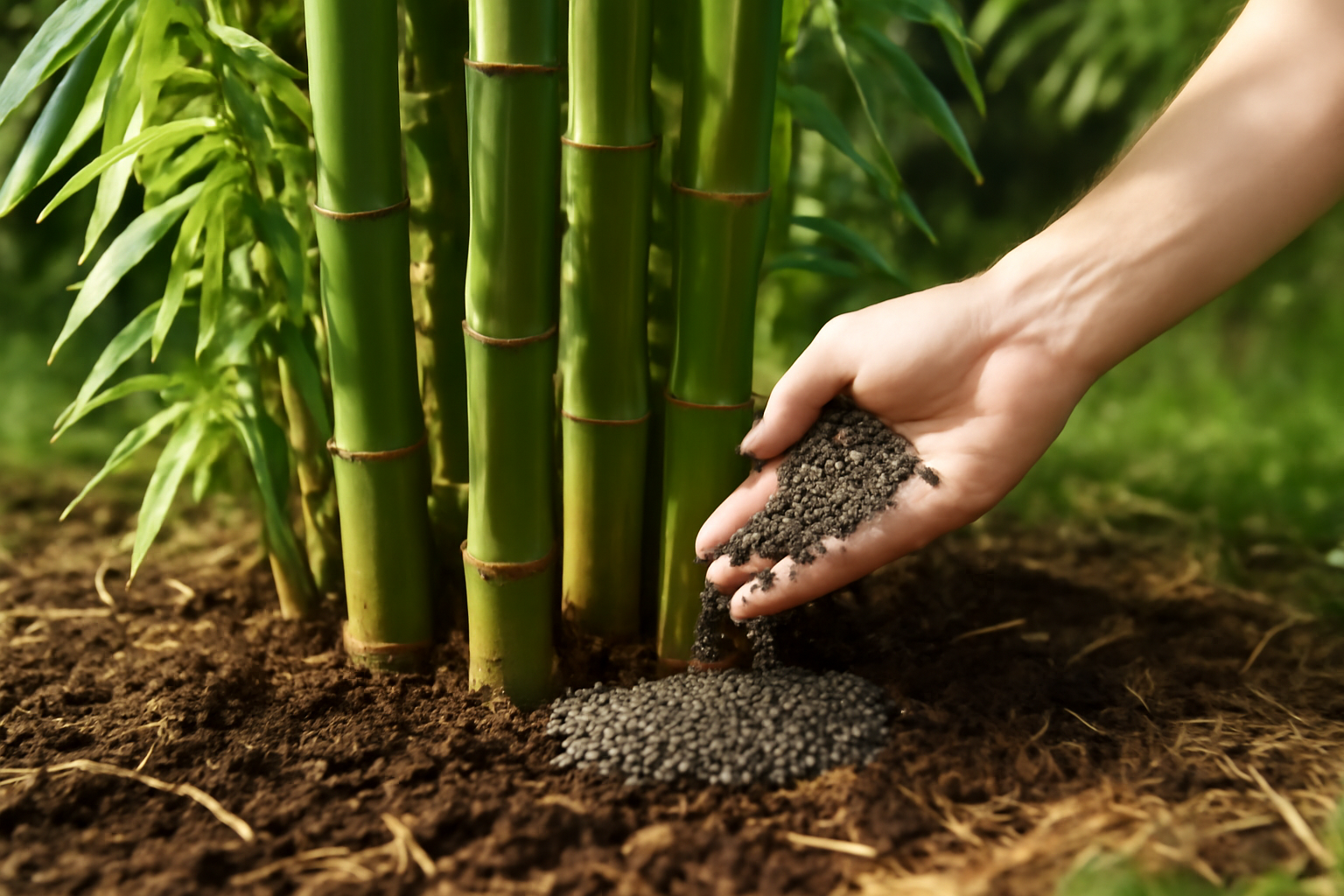
I spread the Burpee granular product by hand across my plantation rows in early spring, working it into the top inch of soil with a cultivator. No special tools needed—just gloves and a measuring cup to portion it out per the bag’s rate guidance. The granules broke down reasonably fast once watered in, though I had to be careful not to pile it directly against culm bases. Application took about three hours across my acreage, and I repeated it mid-season both years. The fiddly part was getting consistent coverage; the granules wanted to clump in humid conditions.
How It Has Held Up
First season showed modest improvement by month four—culm diameter crept back up slightly, and new shoots looked healthier. By season two, the real gains appeared: my soil test nitrogen levels stabilized, and the thinner culms from year one filled out noticeably. I watched closely for the failure mode I feared: incomplete nutrient uptake leaving me with expensive organic matter that didn’t actually feed the plants. That didn’t happen, but the product did work slower than my old synthetic routine—results took weeks, not days. Weather mattered too; dry spells meant weaker uptake. The granules persisted longer in cool springs, which helped, but summer heat broke them down faster than I’d planned.
Where It Falls Short
- Bamboo-specific formulation it is not—this is a general-purpose organic product, so silica content is likely insufficient for serious culm strength; dedicated bamboo fertilizers exist for a reason
- Cost per application runs higher than equivalent synthetic nitrogen when you factor in the slower release rate and need for more frequent applications to match results
- Granular form means weather-dependent performance; heavy rain can wash it away, and dry spells leave it sitting inert until moisture arrives
- Not suitable for growers managing running bamboo in tight suburban settings where neighbour relations are already strained—the slower nutrient availability means slower visible results to prove you’re managing the stand responsibly
Would I Buy It Again
I’d buy it again for my situation, but with realistic expectations. It rebuilt my soil health and got my culms back to acceptable diameter without synthetic guilt. That said, it’s not the right call for anyone needing fast, predictable results or managing bamboo in high-tension neighbour scenarios. A dedicated organic bamboo formula would serve me better long-term.
About This Article

Written by Marcus Chen. Marcus Chen has spent 15 years cultivating and studying bamboo across 14 different species, combining commercial growing operations with extensive hands-on experience in species selection and containment. As both a grower and consultant, he specializes in practical bamboo management, helping homeowners and landscapers understand the real-world requirements for responsible bamboo cultivation. Marcus brings tested knowledge of which species thrive reliably and which present containment challenges that go beyond standard recommendations. More about this site.
Verify this against a primary source
Specifics change, and your situation may differ from the one described here. These are the authorities worth checking directly:
- American Bamboo Society — species listings and cultivation guidance
- USDA PLANTS Database — species range and identification
- USDA Plant Hardiness Zone Map — cold hardiness verification for your location